Abstract
Studies suggest that alcoholism is on the rise around the world, with many individuals facing the damaging consequences of this affliction. Children of Alcoholics (COAs) deal with several psychosocial issues that manifest themselves in the forms of defense mechanisms, or roles which affect their attachment styles and personal relationships. Purposive sampling was used on 398 participants (201 males, 197 females). The first one was for the participants (18 to 25 age range, the minimum level of education: tenth grade). The second was the fathers of the adult children, admitted in rehabilitation for alcoholism. The third foundation for setting the criteria was the family (a nuclear family system and has at least three siblings). A chi-square test for independence was significant [x2 (8, N = 398) = 433.551, p < .001], indicating that adult COAs with specific attachment styles are prone to take on certain roles within the family.
Key Words
Alcoholism, Children of Alcoholics, Attachment, Family Roles, Pakistan
Introduction
Alcoholism is a primary, progressive, chronic, and potentially fatal disease on the rise across the world (Angres, Talbott, & Bettinardi-Angres, 2001). The chemical composition of alcohol elevates mood, which is a prime reason for its universal abuse (World Health Organization, 2004). Alcoholism affects the individual in several ways. Physically, it may lead to a lack of attention and focus, problems with eye-hand coordination, attentiveness, and, at times, fatal (Kalat, 2013). Moreover, it causes problems at a psychological level too. The alcoholic is obsessed to procure alcohol and consume it. The defense mechanisms such as denial are also a common psychological ramification of alcoholism. Furthermore, there is a deterioration on a social level too. There is a significant decline in the quality of relationship with friends and family (Jay, 2006). It has been observed and empirically reported that alcoholism leads to dysfunctionality in daily life, seeping into all areas of the individual's life, including work or business (Moos, Finney, & Cronkite, 1990) and family life (Lowinson, Ruiz, Milman, & Langford, 2005).
Since alcohol is socially accepted in many societies, it has become the most commonly abused substance across the world (National Center on Addiction and Substance Abuse, 2005). The rise is evident in the number of new cases that emerged over two years, i.e., 185 million in the United States of America (National Institute of Health, 2004). In Korea, 3.5 million civilians suffered from alcoholism (Jekarl, 2001). In Pakistan, alcohol is legally banned, yet an alarming 1 million people are involved with alcoholism (Haviland, 2013). Moreover, Pakistan is ranked fifth in road accidents10, and 10% of the truck drivers are inebriated while driving (Mir, Khan, Ahmed, & Razzak, 2012). Another research suggested a higher correlation between alcohol consumption and labor class in Pakistan (Haider & Chaudhry, 2008).
Alcoholism is a chronic disease that impacts the individual and the family. It leads to chaos and unpredictability (Tinnfalt, Ericksson, & Brunberg, 2011) which consequently causes stress and strain in the family members (Black, 2006), hence, referred to as a disease of the family (Cruse & Wegsheider, 2012).
Research shows that spouses of alcoholics experience domestic violence at the hands of the alcoholic, especially in the state of intoxication ( Barnett, Miller-Perrin, & Perrin, 2005). Marital discord is also frequent in couples where one is an alcoholic (Stanley, 2006). Alcoholic's spouse experience higher levels of anxiety, depression, and other mental health problems (Stanley, & Vanitha, 2008). Through empirical research, it is demonstrated that there is the disintegration of the family cohesiveness and organization (Bijtterbier, Goethals, & Ansoms, 2006). Moreover, it is also reported that longer the history of alcoholism more the marital dissatisfaction on the part of the spouse (Kachadourian, Eiden, & Leonard, 2009). Similar findings have been reported across the globe (Gurber, Celan, Golik-Gruber, Agius, & Murphy, 2007).
It is not only the spouse who experiences and internalizes the detrimental effects of alcoholism but also the children (Kelley, Pearson, Trink, Klostermann & Krakowshi, 2011). According to a study done in the USA, 10% of children live in families with alcohol-related issues and abuse (Ruben, 1992). A study was done by Grant (2000) estimated that one out or four children lived or had a parent who had alcohol-related problems. In 2009 it was reported that 6.6 million children are affected by parental alcoholism (Ketcham, Asbury, Schulstad, & Ciaramicoli, 2009).
Over the years, many clinicians and counselors pointed out that the children of alcoholics are a vulnerable population. This was confirmed later through research that the children of alcoholics are at risk of many problems. This vulnerability is reported in almost all areas of life. It is reported to be physical (Braithwait & Devine, 1993) and behavioral (Park, 2007), which may directly or indirectly lead to socially accepted developmental norms of the society (Sandalson, 2012). The other areas of the children of alcoholics lives that are impacted adversely are cognitive and emotional (Young & Adamec, 2013). These vulnerabilities lead to many mental health issues too. Studies have shown that the susceptibility to physical, behavioral, cognitive, or mental health problems of the children of alcoholics is not limited to age, gender, class, culture, creed or ethnicity (Barrera, Hageman, & Gonzales, 2004). Unfortunately, these problems of the children of alcoholics do not automatically diminish if they leave the household or even if the alcoholic stops drinking (DeLucia, Belz, & Chassin, 2001). Some of the mental health issues associated with the children of alcoholics are depression (Corte & Becherer, 2007), anxiety (Sartor, Lynskey, Jacob, & True, 2007), low self-esteem (Rangaranjan, 2008) and stress (Cleveland Clinic Foundation, 2009). Moreover, the children of alcoholics have also been reported to suffer from substance abuse or alcoholism later in life (Fineran, Laux, Seynmore, & Thomas, 2010), attention deficit hyperactivity disorder (Torvik, Rognmo, Ask, Roysamb, & Tambs, 2011) and even relational and marital problems (Kelley, Cash, Grant, Miles, and Santos, 2004).
Systemic theory suggests that when one of the parent’s resorts to alcoholism, the family equilibrium is disturbed. To restore the balance, the children assume family roles that help the child and the family (Nodar, 2012). These distinct roles can take various forms, for instance, that of caregiver, authoritarian, and even a disciplinarian, but are, nonetheless, rigid and strained (Vernig, 2011). According to Wegschieder-Cruse (1985), children and adults alike take on these roles of the dependent, the enabler, or codependent. Families dealing with alcoholism have basic roles of the family hero, the scapegoat (delinquent) recognized as the lost (invisible) child, and the mascot (clown). The wife and the eldest child qualify to take the role of enabler or codependent, which involves being the mediator among family members, convincing children to not rebel against the dependent when drunk and providing justifications to the extended family on behalf of the alcoholic. The eldest child, also known as the ‘perfect child’, may take control of family matters and has exceptional academic performances. They put in the effort to compensate a sense of normality into their family environment. Acting mature for most of the part makes them emotionally closed off and reserved (Potter & Williams, 1991).
The middle child is known to act as a scapegoat or delinquent, in an attempt to divert attention from the alcoholic. Scapegoats are easily identifiable as they have a tendency to depict harmful and disruptive behavior. At times, they may also take on the role of the lost or invisible child, which is characterized by patterns of isolation and distance from family drama. They are known to step into the background away from the spotlight (Daylon, 2012). The youngest child may feel responsible for being humorous and easing the tensed environment at the house, hence, called a mascot. They find a diversion through comedy, which helps to lighten the stressed environment. Owing to this, they are usually the center of attention at gatherings and social events (Veronie & Fruehstorfer, 2001).
These coping mechanisms are temporary survival strategies, hence, unhelpful in the long run; making them rigid and inflexible over time (Sandalson, 2012). Moreover, these roles are not fixed to one particular member and are subject to interchangeability (Black, 2006).
Furthermore, research has laid great emphasis on the parent-child relationship as the foundation of a healthy psychological and social life. Adults identified as securely attached are stable, emotionally positive, supportive, and have supportive relationships (Feeney, 1999), while insecurely attached adults are more prone to conflict, rigidity, and discomfort (Lopez, & Brennan, 2000). Since the alcoholic parent produces unreliable and unexpected environment, their children experience difficulties in life in developing secure relationships (Brennan, Shaver, & Tobey, 1991).
This research will investigate the link between the roles assumed by family members in relation to alcoholism of fathers in Pakistan, and the ensuing effects this has on their children. By incorporating different theories and observational studies, we can identify the patterns of these roles assumed by COA and provide a detailed outlook on this subject which will prove useful for those affected by alcoholism. Furthermore, other mental health issues experienced by COA will be brought to light.
In conclusion, the accelerating problem of alcoholism in Pakistan tends to threaten the weak fabric of familial lives of those involved in it. COA mold their personalities accordingly, but in the long run, great harm is posed on mental health and personal relationships.
Subjects and Methods
The main aim of the current research was to ascertain the relationship between attachment styles and the roles assumed by the adult children of alcoholic fathers.
It has been clearly demonstrated that children of alcoholic fathers are a vulnerable population. They are susceptible to aberrant psychological, behavioral and relational behaviors as a result of parental alcoholism. In order to deal with these aberrations and to have a semblance of control in their lives, they assume certain family roles. It has also been documented that relational problems are rooted in attachment. Therefore, it was deemed fit to study a relationship between family roles and attachment in adult children of alcoholic fathers.
In the present study, the correlational research design was used to ascertain the relationship between roles and attachment.
As the population under study is a selective, specialized and vulnerable population, it was decided to use purposive sampling to recruit the participants. Purposive sampling is a non-probability sampling technique. The sample consisted of N=398 with an average age of 21.45 (SD = 2.37). There was almost an equal number of participations of both genders (201 males, 197 females).
In an effort to have a homogenous group, the certain inclusion criterion was set by the researchers. A three-prong approach was used to set these criteria. The first one was for the participants with an age range 18-25 till tenth grade or above education. The second was that the fathers of the adult children were admitted to a rehabilitation center for alcoholism. Drug abusers were not selected, and they should have been admitted at least twice for a rehabilitation program. The third foundation for setting the criteria was the family. Only those adult COA were selected who reigned from a nuclear family system and has at least three siblings.
Materials and Methods
Three measuring instruments were used in the current study. They are demographic sheet, Role Identification Scale and Adult Attachment Questionnaire. Each one is briefly described below the demographic sheet comprised of gender, age, education, number of siblings, and family system Role Identification Scale is a self-report measure that was used to determine the roles assumed by the adult children of alcoholic fathers in the current study. It consists of 97 items; each item is rated on a 4-point scale (0-3) as “not at all” “rarely” “to some extent” and “very much” This scale measures four roles assumed by the COA in the family (Samuel, Mahmood, & Saleem, 2014).
In order to determine the attachment styles of the sample, the Adult Attachment Questionnaire was used. This is also a self-administered measure consistent of three items as vignettes to measure three attachment styles. They are Avoidant, Ambivalent/Anxious and Secure attachment styles (Hazen & Shaver, 1987).
An appointment was set with the administrator’s/HR personnel of private rehabilitation centers in a cosmopolitan city of Pakistan. The researchers explained the rationale of the study to the staff. They were assured that the data collection procedure would not interfere with the everyday working of the facility, and it will not take more than 20 minutes for each participant to fill the questionnaires. The questionnaires were shown to the staff who met the researchers. Moreover, they were assured that no identifying data of the institution, staff/professionals or participants is required. However, it was requested to grant a comfortable room for the participants to fill out the questionnaires.
The researcher met each participant separately in an office. After the exchange of greeting the researcher gave information about the study. They were told that their participation was on a voluntary basis and they reserved the right to discontinue at any time, and it would about 15 minutes to fill the forms. They were also informed of confidentiality, and that and they should select the option that was most applicable to them. After informed consent, questionnaires, pen and an eraser were distributed to the participant. The participants were thanked for their cooperation.
Questionnaires with missed items were discarded, and rest of the questionnaires were entered in the SPSS for analyses.
Tables and Figures
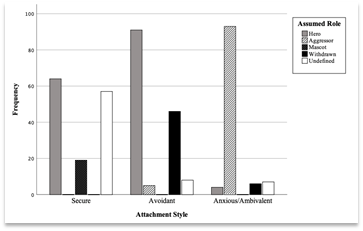
Figure 1: Roles Assumed by Each Attachment Style

Discussion
According to the results adult COA who had secure attachment style mostly assumed the role of the hero or were identified, some assumed the role of the mascot, and none assumed the roles of the aggressor or the withdrawn. Whereas those who had avoidant attachment style mostly assumed the roles either of the hero or the withdrawn, very few Scapegoat but none assumed the role of the mascot. Lastly, that adult COA who had anxious ambivalent attachment style overwhelmingly assumed the role of the aggressor, some withdrawn but none assumed the role of the mascot.
Pakistan dwells on collectivistic culture, and it is commonly observed those children who take on the responsibility of the family (the hero) are celebrated, and it is possible that the appreciation and celebration led to secure attachment over time. Another possibility is that those who had a secure attachment style took the responsibility of doing something for the family and became the hero. There was some Mascot with a secure attachment style, who also took responsibility to lighten the mood in the family by being funny.
That adult COA who had an avoidant attachment style either assumed the role of the hero or the withdrawn. It is possible that the heroes are busy taking care of the family and doing the chores that they avoid investing in relationships. Whereas, those who assumed the role of the withdrawn avoided the relationships to keep themselves safe. Lastly, that adult COA who had an anxious/ambivalent attachment style overwhelmingly assumed the role of the aggressor. The possible explanation for this is that due to anxious or ambivalent attachment style, they do not possess the skill set for interpersonal relationships which leads them to be aggressive in their relationships.
These are just plausible explanations; further research should be done in this area to shed more light on the relationship between attachment styles and the roles assumed by the adult COA.
This study would be helpful to educate the massed about the family disease and how the COA are impacted. Seminars could be conducted so that people would understand it, which could reduce the stigma. The findings could also be used to device intervention plan for the COA. Based on these findings, support groups could be initiated too.
Limitations
The limitations of the study were that the sample was collected from private rehabilitation centers in Pakistan that cater to the middle to higher socio-economic classes. Further research should be conducted with the lower socio-economic population too.
Conclusion
In conclusion, various attachment styles exhibited various role adaptations in their later life. That adult COA who had an avoidant attachment style either assumed the role of the hero or the withdrawn. Adult COA who had anxious/ambivalent attachment style, overwhelmingly assumed the role of the aggressor, some withdrawn but none assumed the role of the mascot. Adult COA who had a secure attachment style mostly assumed the role of the hero or were identified, some assumed the role of the mascot, and none assumed the roles of the aggressor or the withdrawn. This depicts how sensitive attachment styles and role adaptations are to the harsh circumstances an individual has to go through with an alcoholic parent.
References
- Angres, D., Talbott, D., & Bettinardi-Angres, K. (2001). Healing the Healer: The Addicted Physician. Madison, CT: The Psychosocial Press
- Barnett, O., Miller-Perrin, C. L., & Perrin, R. C. (2005). Family Violence Across the Lifespan: An introduction (2nd ed.). Thousand Oaks, CA: Sage.
- Barrera, M., Hageman, D. N., & Gonzales, N. (2004). Revisiting Hispanic Adolescents' Resilience to the Effects of Parental Problem Drinking and Life Stress. American Journal of Community Psychology, 34(1-2), 83 94.
- Bijttebier, P., & Goethals, E. R. (2006). Parental Drinking as a Risk Factor for Children's Maladjustment: The Mediating Role of Family Environment. Psychology of Addictive Behaviors : Journal of the Society of Psychologists in Addictive Behaviors, 20, 126-130. doi: 10.1037/0893-164X.20.2.126
- Braithwaite, V., & Devine, C. (1993). Life satisfaction and adjustment of children of alcoholics: The Effects of Parental Drinking, Family Disorganization and Survival Roles. British Journal of Clinical Psychology, 32(4), 417-429. doi:
- Brennan, K. A., Shaver, P. R., & Tobey, A. E. (1991). Attachment Styles, Gender and Parental Problem Drinking. Journal of Social and Personal Relationships, 8(4), 451-466. doi: 10.1177/026540759184001
- Black, C. (2006). Family Strategies: Practical Tools for Professionals Treating Families Impacted by Addiction. Brainbridge Island: Mac Publishing. Cleveland Clinic Foundation (2009). Fostering a positive selfimage. Emotional Wellbeing.
- Corte, C., & Becherer, M. (2007). Differential Effects of Maternal and Paternal Alcoholism and Gender on Drinking, Alcohol-Related Self-Cognition, and Psychopathology. Journal of Addictions Nursing, 18(4), 175-185. doi: 10.1080/10884600701698828
- Cruse, J., & Wegscheider, C. S. (2012). Understanding Codependency, Updated and Explained: The Science behind it and how to break the cycle. Deerfiled Beach Florida: Health Communication, Inc.
- Daylon, T. (2012). The ACOA Traumatic Syndrome: The impact of Childhood Pain on Adult Relationships. Deerfield Beach, Florida: Health Communication, Inc.
- DeLucia, C., Belz, A., & Chassin, L. (2001). Do adolescent symptomatology and family environment vary over time with fluctuations in paternal alcohol impairment? Developmental psychology, 37, 207-216. doi: 10.1037//0012-1649.37.2.207
- Feeney, J. A. (1999). Adult romantic attachment and couple relationships. In J. Cassidy & P. R. Shaver (Eds.), Handbook of attachment: Theory, research, and clinical applications (p. 355-377). The Guilford Press
- Fineran, K., Laux, J. M., Seymore, J., & Thomas, T. (2010). The Barnum effect and chaos theory: Exploring college student ACOA traits. Journal of College Student Psychotherapy, 24, 17-31. doi: 10.1080/87568220903400096
- Grant, B. F. (2000). Estimates of US children exposed to alcohol abuse and dependence in the family. American Journal of Public Health, 90(1), 112-115.
- Gruber, E., Celan, J., Golik-Gruber, V., Agius, M., & Murphy, S. (2007). The relationship between having smoking or drinking parents and the occurrence of smoking or drinking in their adolescent children. Alcohol and Alcoholism, 43(1), 25-35.
- Haider, W., & Chaudhry, M. A. (2008) Prevalence of alcoholism in the Punjab, Pakistan. Biomedical, 24, 80-84.
- Haviland, C. (2013). Pakistan battles growing alcohol addiction BBC News Asia.
- Hazan, C., & Shaver, P. (1987). Romantic love conceptualized as an attachment process. Journal of Personality and Social Psychology, 52, 511-524
- Jekarl, J. (2001). Survey on drinking habits of Koreans, Seoul, Korea. Korean drinking Culture and Alcohol Research Foundation.
- Jay, D. (2006). No more letting go
- Kachadourian, L. K., Eiden, R. D., & Leonard, K. E. (2009). Parental alcoholism, negative parenting, and the mediating role of marital satisfacition. Addictive Behaviors, 34, 918-927. Doi: 10;1016/j.addbeh.2009.05.003
- Kalat, J. W. (2013). Biological Psychology (11th ed). Belmont: Wadsworth Cengage Learning.
- Kelley, M. L., Cash, T. F., Grant, A. R., Miles, D. L., & Santos, M. T. (2004). Parental alcoholism: Relationships to adult attachment in college women and men. Addictive Behaviors, 18, 1-6. doi:10.1016/j.addbeh.2004.02.064
- Kelley, M. L., Pearson, M. R., Trinh, S., Klostermann, K., & Karkowski, K. (2011). Maternal and parental alcoholism and depressive mood in college students: Parental relationship as mediators of ACOA depressive mood link. Addictive Behavior, 36, 700-706. doi: 10.1016/j.addbeh.2011.01.028
- Ketcham, K., Asbury, W. F., Schulstad, M., & Ciaramicoli, A. P. (2009). Beyond the Influence: Understanding and Defeating Alcoholism. New York: Random House Publishing, Group.
- Lopez, F. G., & Brennan, K. A. (2000). Dynamic processes underlying adult attachment organization: Toward an attachment theoretical perspective on the healthy and effective self. Journal of Counseling Psychology, 47, 283-301.
- Lowinson, J., Ruiz, P., Milman, R., & Langford, G. (2005). Substance Abuse: A Comprehensive Textbook. Philadelphia: Lippincott, Williams and Wilkens.
- Mir, M. U., Khan, I., Ahmed, B., & Razzak, J. A. (2012). Alcohol and marijuana use while driving-an unexpected crash risk in Pakistani commercial drivers: A cross-sectional survey. Bio Medical Central Public Health, 12:145-152. doi:10.1186/1471-2458-12-145
- Moos, R. H., Finney, J.W., & Cronkite, R. C. (1990). Alcoholism treatment: Context, process, and outcome. Oxford University Press.
- National Center on Addiction and Substance Abuse at Columbia University, (2005). Family matters: Substance Abuse and the American Family, New York.
- National Institute of Health (2004). Alcohol Abuse Increases, Dependence Declines Across Decade.
- Nodar, M. (2012). Chaotic Environments and Adult children alcoholics. The Professional Counselor: Research and Practice, 2 (1), 43-47.
- Potter, A. E., & Williams, D. E. (1991). Development of a measure examining children's roles in alcoholic families. Journal of Studies on Alcohol, 52, 50-77.
- Rangarajan, S. (2008). Mediators and moderators of parental alcoholism effects on offspring self-esteem. Alcohol and Alcoholism, 43(3), 481-191. doi: 10.1093/alcalc/agn034
- Samuel, I, S., Mahmood, Z., & Saleem, S. (2014). The development of role identification scale for adult children of alcoholic fathers. Pakistan Journal of Social and Clinical Psychology.
- Sandalson, G. (2012). Adult Children of Abusive Parents Understanding fro Adult Children that Suffered Under Abusive Parents. America: JK Publishing.
- Sartor, C.E., Lynskey, M.T., Jacob, T., & True, W. (2007). The role of childhood risk factors in initiation of alcohol use and progression to alcohol dependence. Addiction, 102 (2) 216-225. doi: 10.1111/j.1360- 0443.2006.01661.x
- Stanley, S., & Vanitha, C. (2008). Psychosocial correlates in adolescent children of alcoholics- Implication for intervention. International Journal of Psychosocial Rehabilitation, 12(2), 67-80.
- Stanley, S. (2006). Marital adjustment and quality of life in couples with and without an alcoholic husband. Indian Journal of Psychological Medicine, 28(2), 18-32.
- Tinnfalt, A., Ericksson, C., & Brunnberg, E. (2011). Adolescent children of alcoholics on disclosure, support and assessment of trustworthy adults. Child Adolescence Social Work Journal, 28, 133-151. Doi:10.1007/s10560-011-0225-1
- Torvik, F. A., Rognmo, K., Ask, H., Roysamb, E., & Tambs, K. (2011). Parental alcohol use and adolescent school adjustment in general population: Results from the HUNT study. Biomedical Central Public Health, 11, 706-716. doi: 10.1186/1471-2458-11-706
- Vernig, P. M. (2011). Family roles in homes with alcohol dependent parents: An evidence based review. Substance Use and Misuse, 46, 535-542. doi:10.3109/10826084.2010.501676
- Veronie, L., & Fruehstorfer, D. B. (2001). Gender, birth order and family role identification among adult children of alcoholics. Current Psychology: Development, Learning, Personality, 20(1), 53-67. Doi: 10.1007/s12144-001-1003-6
- Wegscheider-Cruse, S. (1985). Choice Making. Pompano Beach, Florida: Health Communications, Inc.
- World Health Organization Global Status Report on Road Safety: Time for action (2009). World Health Organization.
- World Health Organization. (2004). Global Status Report on Alcohol 2004, World Health Organization, Geneva.
- Young, J. L., & Adamec, C. (2013). When your Adult Child Breaks your Heart: Coping with Mental Illness, Substance Abuse, and the Problems that Tear Families Apart. Guilford: Lyons Press.
Cite this article
-
APA : Suneel, I., Suneel, E. S., & Anthoney, S. (2020). Relationship Between the Family Roles and Attachment Styles Among Adult Children of Alcoholic Fathers in Pakistan. Global Regional Review, V(III), 56-63. https://doi.org/10.31703/grr.2020(V-III).07
-
CHICAGO : Suneel, Ivan, Elizabeth Schwaiger Suneel, and Sarah Anthoney. 2020. "Relationship Between the Family Roles and Attachment Styles Among Adult Children of Alcoholic Fathers in Pakistan." Global Regional Review, V (III): 56-63 doi: 10.31703/grr.2020(V-III).07
-
HARVARD : SUNEEL, I., SUNEEL, E. S. & ANTHONEY, S. 2020. Relationship Between the Family Roles and Attachment Styles Among Adult Children of Alcoholic Fathers in Pakistan. Global Regional Review, V, 56-63.
-
MHRA : Suneel, Ivan, Elizabeth Schwaiger Suneel, and Sarah Anthoney. 2020. "Relationship Between the Family Roles and Attachment Styles Among Adult Children of Alcoholic Fathers in Pakistan." Global Regional Review, V: 56-63
-
MLA : Suneel, Ivan, Elizabeth Schwaiger Suneel, and Sarah Anthoney. "Relationship Between the Family Roles and Attachment Styles Among Adult Children of Alcoholic Fathers in Pakistan." Global Regional Review, V.III (2020): 56-63 Print.
-
OXFORD : Suneel, Ivan, Suneel, Elizabeth Schwaiger, and Anthoney, Sarah (2020), "Relationship Between the Family Roles and Attachment Styles Among Adult Children of Alcoholic Fathers in Pakistan", Global Regional Review, V (III), 56-63
-
TURABIAN : Suneel, Ivan, Elizabeth Schwaiger Suneel, and Sarah Anthoney. "Relationship Between the Family Roles and Attachment Styles Among Adult Children of Alcoholic Fathers in Pakistan." Global Regional Review V, no. III (2020): 56-63. https://doi.org/10.31703/grr.2020(V-III).07